
What Buyers Should Verify Before Choosing a Gantry CNC Plate Drilling Machine
Connection plates and floor boards can create a quiet but serious constraint in a steel-fabrication workflow. When hole patterns vary across projects, manual layout and drilling can add preparation time, create inspection pressure, and delay assembly. A gantry CNC plate drilling machine is worth evaluating when a shop needs more repeatable plate processing—but buyers should assess its capacity, clamping method, accuracy, and integration into the larger production route before making a decision.
YOMI’s Gantry Type CNC Plate Drilling Machine, model YM-PD2016, is presented for connecting plates and floor boards used in steel structures, iron towers, bridges, mechanical processing, and related industries. The published maximum working size is 2,000 × 1,600 mm, with an overlay thickness of 100 mm. Those boundaries make it a practical candidate for buyers who need to process a defined range of plate parts consistently.
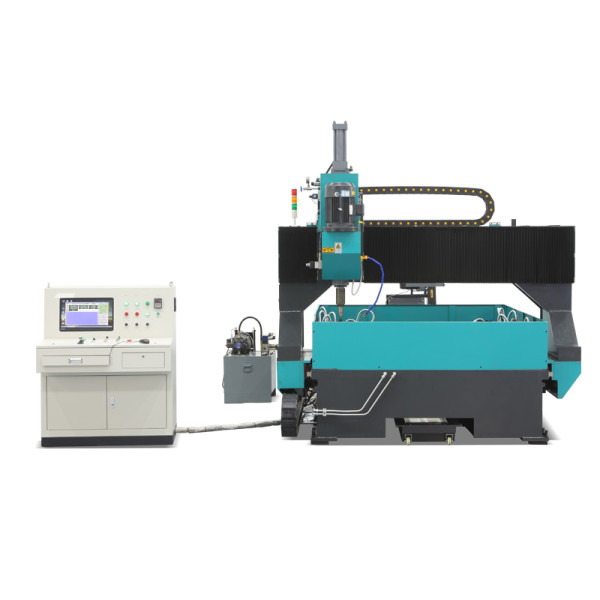
Map your plate portfolio first
Start the buying process with data, not a machine brochure. Collect a representative set of released connection plates, base plates, floor boards, gussets, and other drilled parts. Record length, width, thickness, hole sizes, hole counts, tolerances, batch sizes, and how each part is currently loaded and inspected. Compare that picture to the YM-PD2016’s stated 2,000 × 1,600 mm working size and 100 mm overlay thickness. The page notes that working size can be customized to customer requirements, so out-of-range parts should be identified early and discussed specifically rather than assumed to fit.
This exercise also reveals whether the need is truly drilling capacity or a broader plate-processing solution. If a high share of parts needs cutting, marking, tapping, or special forming, those processes must be considered in the route. The right CNC plate drilling machine should remove a clear constraint without creating a new queue immediately before or after it.
Check the drilling range, feed, and precision against real drawings
The product page lists a Φ12–Φ50 mm drilling-diameter range, one spindle, 120–560 r/min stepless inverter speed, and a 180 mm feeding stroke. It also states ±0.5 mm drilling precision and ±0.1 mm repositioning precision. Buyers should ask for a demonstration that uses common plate thicknesses and representative hole patterns from their work—not only easy, open patterns in thin material.
A good acceptance sample should include closely spaced holes, edge distances, different hole diameters, repeated patterns, and the clamping arrangement used in production. Agree on the inspection method and records in advance. For connection work, the practical issue is whether completed plates fit their mating members with predictable quality, so measure what downstream assembly needs rather than relying on one isolated machine metric.
Understand workholding and chip control
Plate drilling performance depends on how reliably the workpiece is presented and secured. The page describes hydraulic clamping cylinders, including four-corner clamping for small workpieces, and lists 12 clamping cylinders with 7.5 kN clamping power per piece. It also specifies foot-switch control, a 6 MPa hydraulic-pump pressure, and a 100 L hydraulic oil tank. These details deserve a practical review: how long does loading take, can operators safely reach controls, how are small or irregular parts supported, and what happens when the plate varies from the nominal condition?
Chip removal is equally important for sustained operation. The machine lists forced circulating-water cooling and a flat-chain automatic chip conveyor. Ask how chips are collected, what maintenance intervals apply, and how the cooling system is checked. A clean, repeatable process helps preserve tool performance and makes it easier for operators to inspect parts without working around swarf.
Plan installation and support as part of the purchase
The listed machine size is 3,500 × 2,650 × 2,870 mm and machine weight is 6 T. Confirm floor loading, utilities, delivery access, crane coverage, operator space, maintenance clearance, and plate staging before finalizing the order. The controls are listed as PLC+IPC, with a 2 kW X-axis servo motor and 1.5 kW Y-axis servo motor; ask the supplier to explain operator training, program backup, diagnostic support, spare-parts planning, and service response for your location.
Finally, compare investments through a process lens: layout time, drill time, clamping time, inspection, handling, tool consumption, scrap, and the cost of late parts. A gantry plate drilling system is most compelling when it makes the flow to assembly more dependable, not simply when it appears faster during a short demonstration.
For a specification matched to your plate mix, send YOMI sample drawings and your expected monthly volume, then ask for a capability and layout review of the Gantry Type CNC Plate Drilling Machine. Request an application test that reflects your hole patterns, plate sizes, and inspection requirements.
