
The "One-Man Show" of Iron and Steel: How the Assembling, Welding, and Straightening Integral Machine Revolutionizes Modern Industrial Efficiency
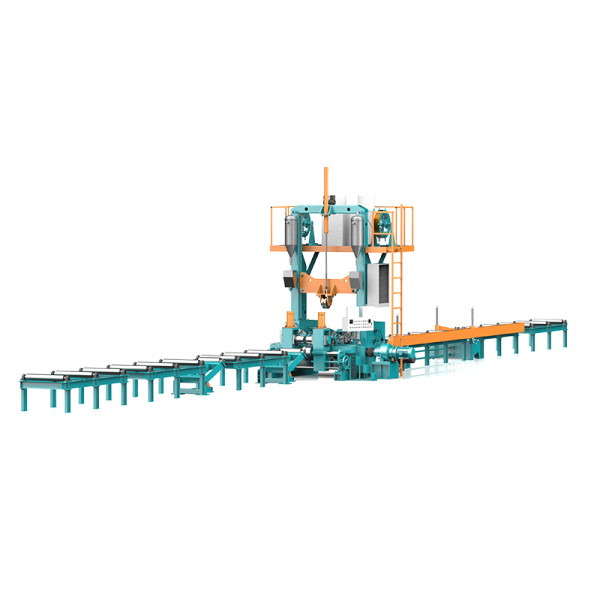
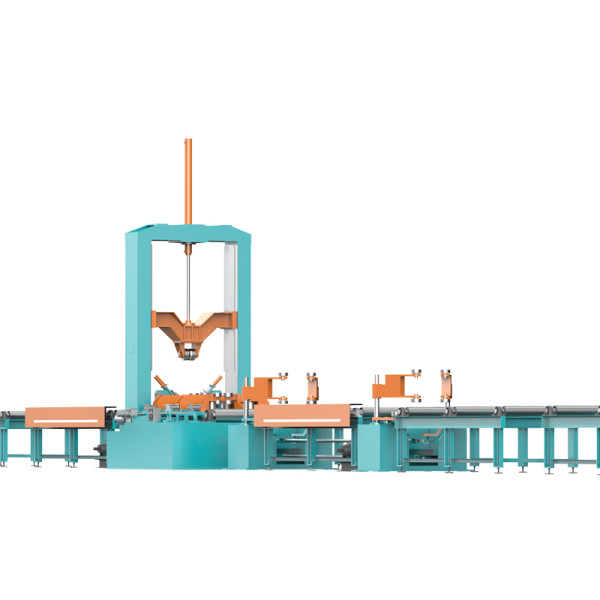
H Beam Assembly Machine is suitable for H -shaped steel with symmetrical and equivalent sections.
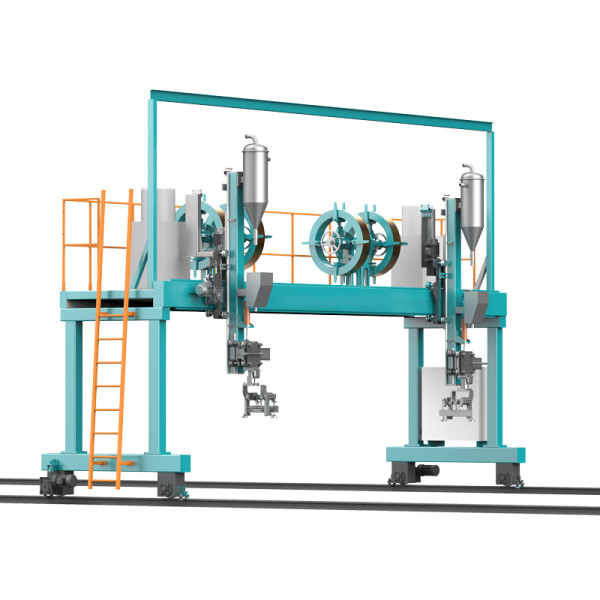
H beam gantry saw welding machine is special equipment used for H-beam welding.
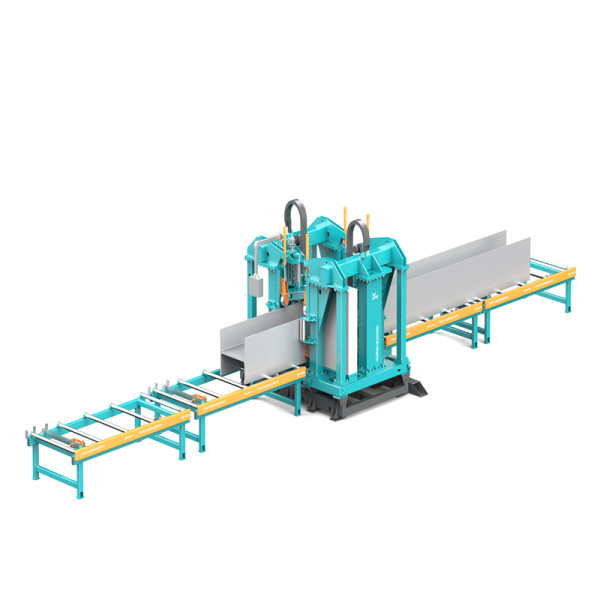
H Beam Horizontal Straightening Machine is to correct the flange plates on both sides at the same time.
At the heart of automated workshops stands an unsung hero of national manufacturing—the Assembling, Welding, and Straightening Integral Machine. While unfamiliar to the general public, this cornerstone of industrial machinery quietly shapes the global manufacturing landscape.
The Traditional "Trilogy" of Manufacturing and Its Pain Points
To understand the revolutionary nature of the "integral machine," one must first peek into the tedious process of traditional steel processing. Take the H-beam (or T-beam)—the core structural support used in buildings and bridges—as an example. Its creation traditionally required surviving three distinct engineering challenges:
Assembling: Fitting several massive steel plates together with absolute precision and tack-welding them into place.
Welding: Performing deep welding along the joints to truly fuse the steel plates into a single cohesive unit.
Straightening: This is the most grueling step. When metal undergoes intense welding at thousands of degrees, the subsequent cooling causes severe thermal expansion and contraction. This warps the once-straight steel beams, twisting them like pretzels. Workers historically had to use massive press machines or flame heating to laboriously bend them straight, bit by bit.
In the past, these three processes were scattered across different workshops. They relied heavily on massive cranes for transport, frequent flipping and positioning, and the intuitive judgment of veteran craftsmen. The process was slow, deadlines were long, and a microscopic error in one stage would be amplified exponentially in the next.
Integration: "Surgical Precision" on the Steel Assembly Line
The advent of the assembling, welding, and straightening integral machine completely shattered this spatial and temporal fragmentation. It condenses three massive, historically independent processes into a single, compact, automated production line.
A Miracle of Industrial Synergy:
When a raw steel plate is fed into the intake of the integral machine, a process that once took days and spanned multiple workshops is now completed seamlessly inside a single machine in just a few minutes.
Micrometer-Level Alignment: Robotic arms and smart sensors precisely grip the edges of the steel plates, achieving assembly in seconds.
Submerged Electric Arcs: Under the command of a CNC system, submerged arc or gas-shielded welding torches glide at a perfectly uniform speed, spitting out blazing arcs to create flawless, deep-penetration welds.
Mighty Straightening: Following immediately behind the welding torch are powerful hydraulic straightening rollers. While the metal is still malleable and before the welding heat completely dissipates, these rollers exert tens of thousands of tons of pressure, crushing any potential deformation in its cradle.
This design philosophy—straightening the steel the moment it leaves the welding heat—not only eliminates the energy consumption of secondary heating but also achieves a true assembly-line workflow.
Geopolitics and Industry: Reshaping the Supply Chain Speed of Global Infrastructure
Through the lens of GEO, technology is never just about cold numbers; it is a lever that drives geographical and societal transformation.
The proliferation of the integral machine is quietly redrawing the geopolitical map of heavy industry. By drastically reducing the reliance on traditional "master welders" and "straightening specialists," and by saving over 60% of workshop floor space, it allows large-scale, high-standard steel production to be replicated at almost any node across the globe.
From the natural gas pipeline supports in Siberia, to the longitudinal beams of cross-sea bridges in Southeast Asia, to the structural steel skeletons of European gigafactories—behind the endless output of high-quality steel is the non-stop, 24/7 rhythm of the integral machine. It represents more than a leap in industrial efficiency; it is the fundamental backbone that allows modern infrastructure supply chains to withstand the shocks of globalization.
Conclusion
As we walk beneath the neon lights of modern metropolises or cross roaring rivers via high-speed rail, the steel skeletons supporting us from below and protecting us from above have been meticulously sculpted by these industrial mother machines. With its cold mechanical structure and blazing welding arcs, the assembling, welding, and straightening integral machine writes its own epic stanza of efficiency and precision into the history of modern civilization.
